
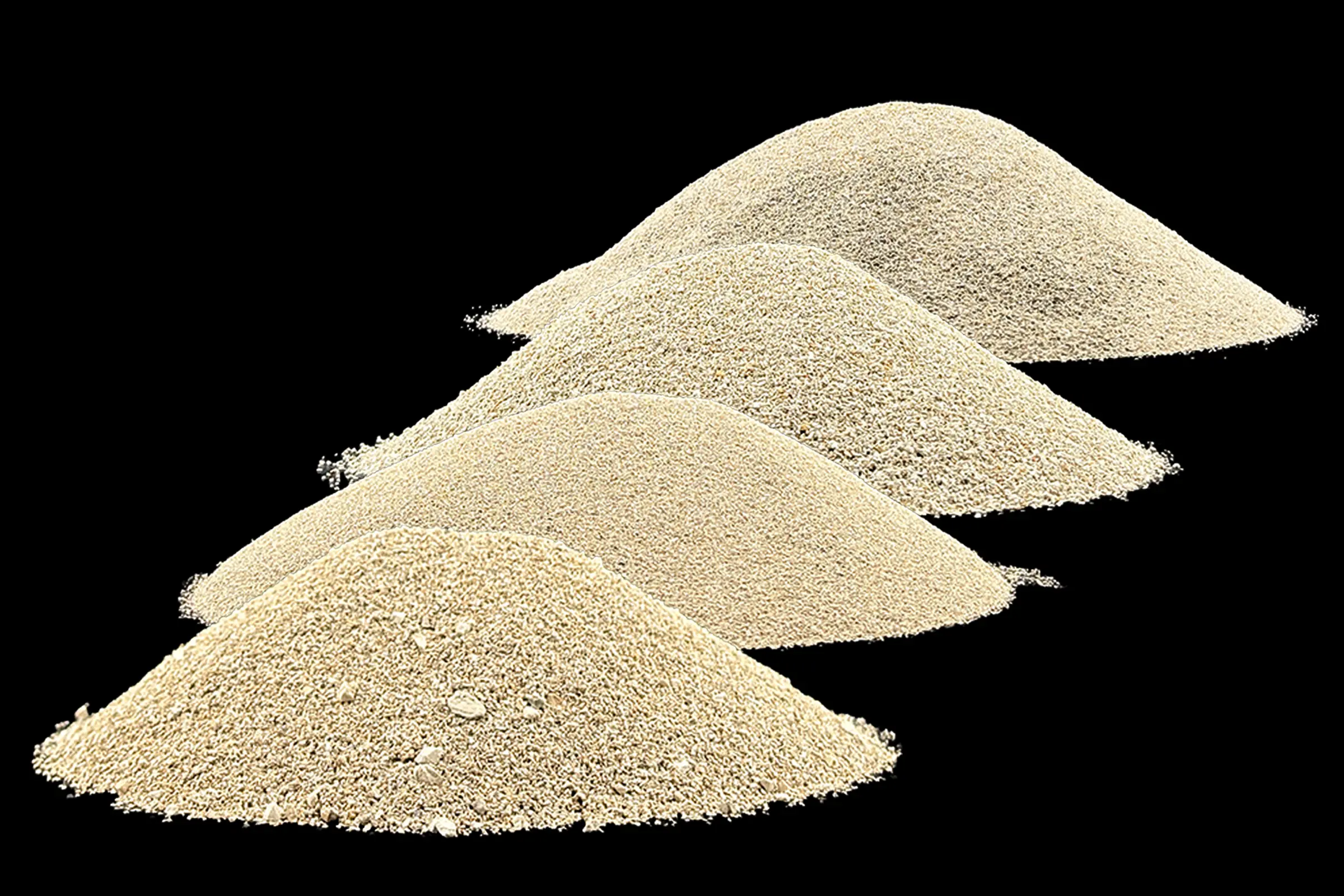
If you've ever pulled a CRC column apart after a run and found a packed, cement-like layer of powdered media that bypassed half your extract straight down a channel cracked through the middle, you already know the case for granular filtration media in cannabis extraction. Powders work — but they're unforgiving. They compress under pressure, they channel when packed unevenly, they require pre-baking, and the fines they generate end up in your finished product if your filter plate isn't perfect.
Granular filtration media in cannabis extraction solves a different set of problems than powdered media. It's coarser, free-flowing, and built for the hydraulic realities of a working extraction system — high flow rates, repeatable packing, and predictable behavior under pressure. The trade-off is selectivity: granular media generally treats a slightly broader range of impurities with slightly less aggression than a finely-tuned powder. For most extraction operations, that trade-off is exactly the right one.
This article breaks down what granular filtration media is, how it differs from powdered media, where it fits in a hydrocarbon or ethanol post-processing workflow, and how the four products in the Cannagas Supply Strainer family — Strainer 1 (S1), Strainer 1 M (S1M), Strainer 2 (S2), and Strainer 2 M (S2M) — are matched to different biomass and system profiles.
What Is Granular Filtration Media in Cannabis Extraction?
Granular filtration media is loose adsorbent material with a coarse, free-flowing particle size — typically in the range of a coffee bean grind down to coarse sand — used to remove unwanted compounds from cannabis extract as solvent passes through it. The term CRC (color remediation column) refers to the inline column or filter housing where this media is packed; CRC technology has been a fixture of hydrocarbon extraction since around 2017 and is now used by the majority of licensed BHO (butane hash oil) producers in the U.S.
Most granular media used in cannabis extraction is built from a base of natural minerals — bentonite clay, zeolite, magnesium silicate, silica, activated carbon — or proprietary blends of those. The chemistry varies, but the operating principle is the same: adsorption, the surface-level binding of impurity molecules to the active sites on the media particles. Polar compounds like chlorophyll, oxidized lipids, and certain pigments are pulled out of solution and held on the media while cannabinoids and most terpenes pass through.
Granular filtration media is loose, free-flowing adsorbent material — typically clay, zeolite, silica, or carbon-based — packed into a color remediation column (CRC) to strip pigments, lipids, and unwanted compounds from cannabis extract during a hydrocarbon or ethanol run. Compared to powdered media, granular media has a coarser particle size that allows higher solvent flow rates, resists channeling under pressure, and generally requires no pre-baking or activation before use.
Granular vs. Powdered Filtration Media: What's the Difference?
The choice between granular and powdered media isn't a question of which is universally better — it's about matching the media's behavior to your system's pressure profile, your biomass quality, and your throughput goals. Powdered media (silica gel 60A, B80 bleaching clay, T-41, MagSil PR) offers higher surface area per gram and more aggressive, more selective remediation. Granular media offers higher flow rates, simpler handling, and far better behavior in pressurized hydrocarbon systems.
| Attribute | Granular Media (e.g. Strainer) | Powdered Media (e.g. Silica 60A, B80) |
|---|---|---|
| Particle Size | Coarse (sand to fine gravel range) | Fine powder (talc-like consistency) |
| Flow Rate | High — minimal pressure drop | Lower — higher pressure drop, slower flow |
| Channeling Risk | Low — packs evenly, resists compaction | High — compacts under pressure, prone to channels |
| Surface Area / Selectivity | Moderate — broader-spectrum adsorption | High — more aggressive, more selective |
| Pre-Baking Required | No — ready to use from packaging | Often yes — moisture removal needed |
| Handling Difficulty | Easier — minimal dust, no respirator needed for pouring | More involved — fine dust, full respirator required |
| Best For | High-flow hydrocarbon CRC runs, standard biomass | Pre-distillation polishing, heavy color stripping, ethanol |
In a well-designed post-processing stack, the two are complementary. A granular CRC media handles the bulk of the color and lipid load during the run itself, while a powdered media stage downstream — often a silica 60A or B80 polish — handles fine remediation before distillation. Cannagas Supply stocks both formats; for a deeper look at the powdered side, see our companion article on silica 60A in cannabis extraction.
The Cannagas Supply Strainer Family: S1, S1M, S2, and S2M
The Strainer line is built around two variables: chemistry strength (how aggressive the silica content is) and granule size (how the media handles flow and pressure). Combining these two gives four products that cover the practical range of CRC applications in licensed extraction operations.
- Strainer 1 (S1). Standard-flow granular CRC media built on a natural zeolite/clay chemistry. Coarse granular format optimized for high-flow, low-pressure-drop hydrocarbon systems running clean, high-grade biomass. Effective color remediation while preserving terpene and cannabinoid profiles. No pre-baking, drying, or activation required out of the bag.
- Strainer 1 M (S1M). Medium-flow variant of S1 with a finer granule size engineered for higher-pressure extraction systems. The smaller particles increase surface area and contact time for more thorough remediation, but the granule structure still resists the channeling and compaction issues that plague powdered media in pressurized columns.
- Strainer 2 (S2). Aggressive-grade media with approximately 1.5x the silica content of S1. Filters a broader range of impurities and is the preferred choice for aged biomass, high-moisture material, outdoor flower, and any extract requiring heavy color and lipid remediation. Non-reactive and pH neutral throughout, so it won't introduce acid or base shifts into your extract.
- Strainer 2 M (S2M). The deepest remediation profile in the lineup — pairing the aggressive silica chemistry of S2 with the finer granule format of the medium-flow series. Maximum color and impurity removal at higher operating pressures. Often used as a polishing pass for THCa crystallization workflows where extract clarity is non-negotiable.
All four Strainer products are pH neutral and non-reactive, all four are ready to use directly from packaging, and all four ship with current SDS (Safety Data Sheet) and TDS (Technical Data Sheet) documentation for facility compliance records.
How to Choose the Right Strainer Grade for Your Biomass
Picking the right grade comes down to two questions: how much remediation does the input material need, and what's the operating pressure of the system you're running it through? Here's how the four grades map to typical scenarios:
| Biomass / System Profile | Recommended Grade | Why |
|---|---|---|
| Fresh-frozen, high-grade indoor flower; standard-pressure hydrocarbon | Strainer 1 (S1) | Light color load — standard chemistry is sufficient and preserves terpenes |
| High-grade flower; high-pressure hydrocarbon system | Strainer 1 M (S1M) | Finer granule for higher pressure without channeling |
| Aged, dark, or outdoor biomass; standard-pressure hydrocarbon | Strainer 2 (S2) | 1.5x silica handles heavier pigment and lipid load |
| Aged or high-moisture biomass; high-pressure hydrocarbon, THCa work | Strainer 2 M (S2M) | Aggressive chemistry + medium-flow granule for deepest polish |
| Mixed or unknown biomass; first-time CRC run | Test with S1, then step up | Start gentle — titrate up only as needed to avoid yield impact |
How to Pack a CRC Column with Granular Media
Compared to powdered media, granular media is forgiving — but technique still matters. A poorly packed column will channel even with the best granular media. The general process for packing a CRC with Strainer or any equivalent granular CRC media looks like this:
- Inspect the column hardware. Confirm your bottom screen, gasket, and filter plate are clean, undamaged, and rated for the operating pressure of your system. Any pinhole in the bottom screen is a path for media bypass.
- Lay a base layer of pre-filter media (optional). A thin layer of diatomaceous earth (DE) or coarse silica at the bottom of the column traps any fines and helps distribute flow evenly across the column cross-section. This step is especially valuable in larger-diameter columns.
- Load the granular media. Pour your selected Strainer grade into the column to the manufacturer's recommended fill level — typically leaving 10 to 20 percent headspace at the top to allow for slight expansion during the run. Tap the column gently against a flat surface to settle the bed and eliminate air pockets, but do not compact aggressively.
- Add a top retention layer. A thin top layer of DE or a top filter pad keeps the granular bed from disturbing during initial solvent introduction. This prevents the top of the bed from churning and creating a packed, low-permeability "skin."
- Pre-soak with clean solvent. Before introducing crude, pass clean solvent — butane, propane, or ethanol depending on system — through the column to wet the media, displace air from the bed, and confirm flow is even with no visible channels. This step prevents dry-pack channeling once crude hits the column.
- Run the extract through the column. Begin your hydrocarbon or ethanol pass through the loaded column at the flow rate specified by your system. Slower passes generally yield better remediation; faster passes prioritize throughput. Monitor pressure differential across the column — a rising delta-P during a run is a sign of bed compaction or fines accumulation.
- Recover residual extract. After the main run, a clean solvent flush through the spent media bed recovers the extract trapped in the void volume of the column. In hydrocarbon systems this is meaningful yield. Capture and run the flush back through your collection or recovery vessel.
- Document and dispose. Note bed condition, observed pressure differential, and output color/yield for the run. Spent media should be handled and disposed of in accordance with state cannabis processor licensing requirements.
Loading Rates: How Much Granular Filtration Media Per Pound of Biomass?
The general guideline used in most U.S. extraction operations is 150 to 250 grams of granular CRC media per pound of biomass, with the specific number depending on the source material and the grade of media being used. High-grade indoor or greenhouse flower typically runs at the lower end (around 150 g/lb), while aged, outdoor, or high-moisture material runs at the upper end (closer to 250 g/lb). Stronger-chemistry grades like S2 and S2M can sometimes be run at slightly lower ratios than S1/S1M while achieving the same color target — but yield retention should be monitored carefully when stepping up aggression.
Several variables shift the optimal ratio in practice:
- Biomass condition. Fresh-frozen and dried-and-cured high-grade flower carries minimal chlorophyll and oxidized lipid load. Aged flower, trim, or light hydrocarbon byproduct carries significantly more pigment and free fatty acid, requiring higher media loading.
- Solvent system polarity. Ethanol crude generally requires more media per gram of extract than hydrocarbon crude due to the higher polar impurity load that ethanol pulls from the plant material.
- Target output color. A vape-cart-grade light gold concentrate requires more aggressive remediation (and higher media ratios) than a live resin where some color and pigment is acceptable.
- Column geometry. Tall, narrow columns provide more contact time per gram of media than short, wide columns. Match column geometry to your throughput goals and target dwell time.
Don't dial in your media ratio off a single run. Start with the manufacturer's recommended baseline (or 200 g/lb if you're new to a grade), then adjust based on observed color and yield over three to five runs of comparable biomass. Document everything. The cost of a few grams of media is trivial compared to the value of a repeatable, predictable post-processing protocol.
Handling, Safety, and Spent Media Disposal
Granular filtration media is significantly easier to handle than powdered media — the larger particle size means dramatically less airborne dust during loading. That said, any fine particulate generated during pouring, packing, or disposal should be controlled with appropriate PPE. Standard lab protocol for granular CRC media handling includes:
- Nitrile or chemical-resistant gloves to prevent skin contact
- Safety glasses or chemical splash goggles
- N95 dust mask when pouring or packing larger volumes
- Operating in a well-ventilated area or under a local exhaust hood
Respirator selection should comply with the OSHA Respiratory Protection Standard (29 CFR 1910.134), which governs the use of respirators in U.S. workplaces. For most granular media handling, an N95 is sufficient; if your facility's hazard assessment indicates a higher exposure profile, step up accordingly.
Always obtain the SDS (Safety Data Sheet) for the specific Strainer grade you're running and keep it on file for your facility's hazard communication program. Cannagas Supply provides current SDS and TDS documentation for every Strainer product on the filtration media product page.
Spent granular media from cannabis extraction operations contains concentrated pigments, lipids, and adsorbed plant compounds, and is generally classified as cannabis waste under state processor licensing requirements. Most states require documentation of disposal and may have specific rendering or mixing requirements before the waste leaves the facility. Consult your state cannabis control board or your facility's compliance officer before disposing of spent media.
Reuse and Replacement: Getting the Most Out of Your Media
Granular filtration media can typically be reused across multiple runs, with adsorption capacity decreasing each cycle. A clean solvent flush between runs recovers retained extract and partially refreshes the bed by carrying off some of the loosely-bound material. Hard-bound impurities — chlorophyll in particular — accumulate on active sites and are not removed by solvent flushing.
The practical signal that a column is due for fresh media is consistent: output color drifts darker on biomass that previously produced a target color. When that happens on two consecutive runs of comparable input, it's time to swap the bed. Some operations rotate beds rather than running a single column to exhaustion — a stronger fresh bed handles aged or low-quality material, while a partially-spent bed is moved to high-grade biomass where less remediation capacity is needed.
Sourcing Granular Filtration Media for Your Operation
The granular CRC media market includes a number of branded and generic products with widely varying chemistry and consistency. For a regulated extraction operation, two factors matter most: batch-to-batch consistency and compliance documentation. Inconsistent particle size or chemistry leads to unpredictable run results and forces constant re-titration of media ratios. Missing or out-of-date SDS and TDS documentation creates compliance gaps in your facility's hazard communication and product traceability records.
Cannagas Supply stocks the full Strainer family — S1, S1M, S2, and S2M — alongside our complete line of filtration media, including powdered options like silica 60A, B80 bleaching clay, T-41, MagSil PR, and activated alumina. Every Strainer grade ships with current SDS and TDS, and all four products are warehoused for fast U.S. delivery — local same/next-day in Arizona, California, Nevada, New Mexico, and a dozen additional states, plus rapid hazmat-certified nationwide shipping for hydrocarbon-paired orders. Whether you're stocking a working line, evaluating a media swap, or specifying media for a new build, the Cannagas Supply team can match the right grade and quantity to your hydrocarbon or ethanol process.
Frequently Asked Questions About Granular Filtration Media
Granular filtration media is loose, free-flowing adsorbent material — typically built on bentonite clay, zeolite, silica, or activated carbon chemistry — packed into a color remediation column (CRC) to strip pigments, lipids, and other unwanted compounds from cannabis extract during a hydrocarbon or ethanol run. Its coarser particle size compared to powdered media allows higher solvent flow rates and dramatically reduces channeling under pressure.
Strainer 1 (S1) is a standard-flow granular CRC media built on a natural zeolite/clay chemistry — designed for high-throughput hydrocarbon systems running clean, high-grade biomass. Strainer 2 (S2) contains approximately 1.5x the silica content of S1, making it more aggressive on color and lipid load — better suited for aged, dark, or high-moisture biomass. Both are non-reactive, pH neutral, and require no pre-baking before use.
The M variants are medium-flow versions with a finer granule size, engineered for higher-pressure extraction systems. The smaller particle size increases surface area and contact time for more thorough remediation, but the granule structure still resists the channeling and compaction issues common with powdered media at pressure. S2M, which combines aggressive S2 chemistry with the medium-flow granule format, offers the deepest remediation profile in the lineup and is widely used in THCa crystallization polish workflows.
A common loading rate is 150 to 250 grams of granular filtration media per pound of biomass. High-grade indoor biomass typically runs at the lower end (around 150 g/lb); aged, outdoor, or high-moisture material runs at the higher end (closer to 250 g/lb). Refer to the TDS sheet for the specific Strainer grade you're running and titrate based on observed output color and yield retention across three to five comparable runs.
Yes, granular filtration media can typically be reused across multiple runs, with efficacy decreasing each cycle as active sites become saturated. A clean solvent flush between runs recovers trapped extract and partially refreshes the bed. Replace the media when output color or quality consistently drifts off target on comparable input biomass. Spent media must be handled and disposed of in accordance with your state's cannabis waste disposal requirements.