
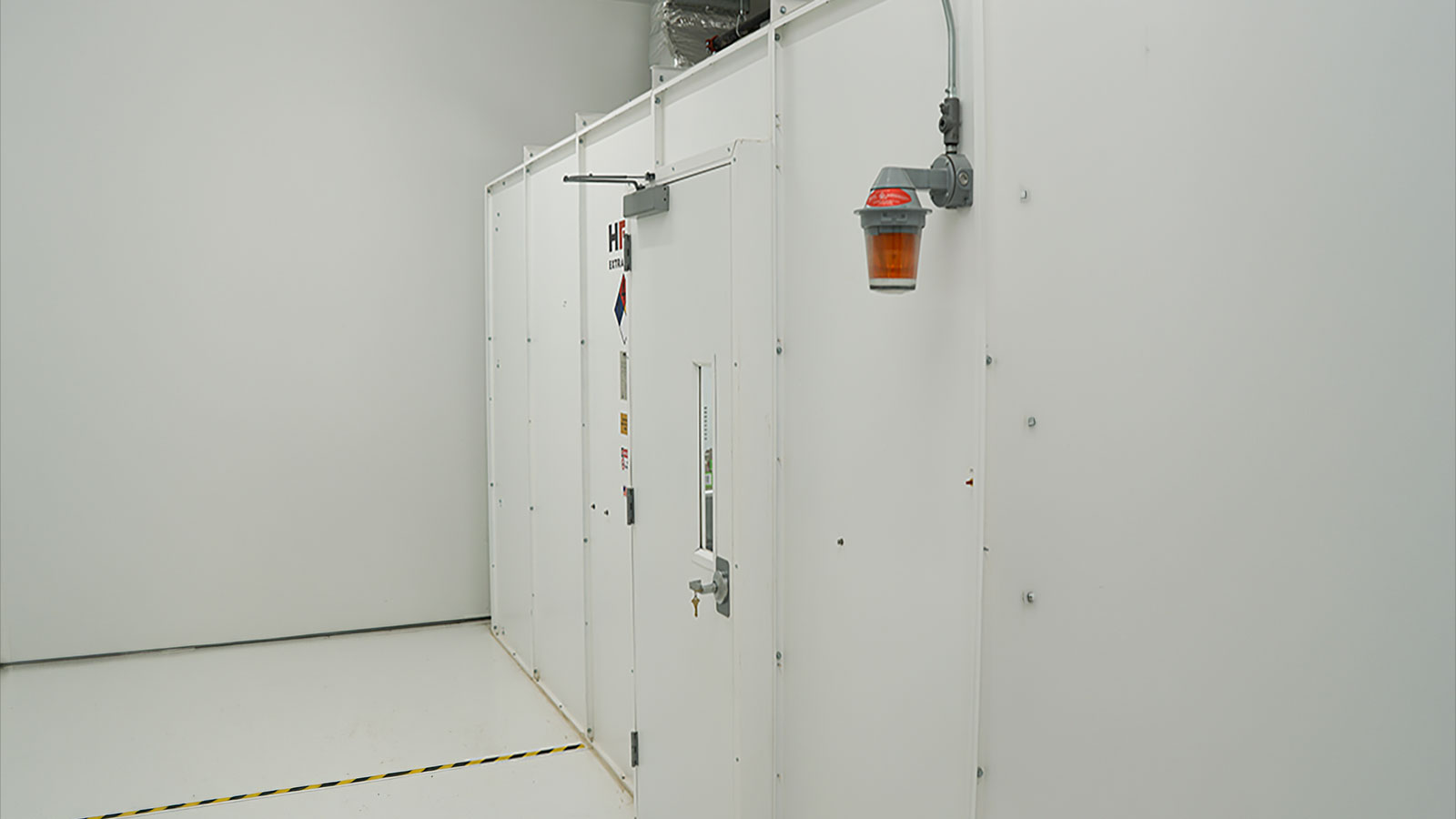
Before you buy a single piece of extraction equipment, you need to know what kind of room you're putting it in. For solvent-based cannabis and hemp extraction operations, that decision almost always comes down to two codes: C1D1 (Class 1, Division 1) or C1D2 (Class 1, Division 2). The difference between them determines what electrical fixtures you can use, what ventilation you need, what equipment will pass inspection, and ultimately whether your operation gets an occupancy permit at all.
Understanding C1D1 vs C1D2 isn't optional — it's the foundation of your facility design and your path through permitting. This guide walks through what each classification actually means under the National Electrical Code (NEC), how they differ, which one applies to common cannabis extraction workflows, and what each rating requires in a real buildout. The goal is to help you ask the right questions of your fire marshal, engineer, and equipment supplier before you break ground.
What Do C1D1 and C1D2 Mean?
C1D1 and C1D2 are shorthand for Class 1, Division 1 and Class 1, Division 2 — two categories within the hazardous location classification system defined by the National Fire Protection Association's NFPA 70 (National Electrical Code), Article 500. These classifications identify areas where flammable gases, vapors, or liquids may be present in quantities sufficient to produce explosive or ignitable mixtures, and they dictate the type of electrical equipment, wiring methods, ventilation, and safety systems that can be installed in those areas.
The "Class" refers to the type of hazardous material present. Class 1 covers flammable gases, vapors, and liquids — the category that includes every solvent used in cannabis extraction (butane, propane, isobutane, ethanol, isopropyl alcohol). Class 2 covers combustible dusts, and Class 3 covers ignitable fibers; neither applies to solvent extraction.
The "Division" refers to how likely it is that hazardous concentrations will be present. Division 1 means ignitable concentrations may exist under normal operating conditions. Division 2 means the same materials are present but are contained within closed systems, and ignitable concentrations are expected only under abnormal conditions — a leak, a spill, an equipment failure, or accidental rupture.
C1D1 (Class 1, Division 1) and C1D2 (Class 1, Division 2) are hazardous location classifications defined by NFPA 70 Article 500. C1D1 applies to areas where ignitable concentrations of flammable gases or vapors may be present under normal operating conditions. C1D2 applies to areas where those substances are handled in closed systems and are only expected to be present under abnormal conditions such as a leak or equipment failure. In cannabis extraction, C1D1 is typically required for open hydrocarbon handling, while C1D2 is often acceptable for closed-loop systems and most ethanol workflows — subject to Authority Having Jurisdiction (AHJ) approval.
C1D1 vs C1D2: Key Differences at a Glance
The practical differences between C1D1 and C1D2 show up across every major facility system — electrical, ventilation, structural, and life safety. A Division 1 buildout is meaningfully more expensive than a Division 2 buildout, but it may also be the only option that passes inspection depending on your solvent and process.
| Criteria | C1D1 (Class 1, Division 1) | C1D2 (Class 1, Division 2) |
|---|---|---|
| Vapor Presence | Present under normal operation | Present only under abnormal conditions |
| Typical Solvent Use | Open hydrocarbon handling, manual transfers | Closed-loop systems, ethanol in sealed process |
| Electrical Equipment | Explosion-proof or intrinsically safe, certified for Group D | Non-sparking / non-arcing rated for C1D2 |
| Ventilation | 12+ air changes per hour typical | 6–12 air changes per hour typical |
| Gas Detection | Continuous, multi-point, auto-shutoff | Required, typically less stringent placement |
| Structural | Blast-rated walls (5–7 PSI), steel panels common | Non-combustible construction, less stringent |
| Permitting Complexity | High — often requires PE-stamped EAC study | Moderate — EAC still typically required |
| Relative Buildout Cost | Higher (150–300% of C1D2 in many cases) | Lower |
The cost delta is real, but the classification is not something operators choose for budget reasons — it's dictated by the process, the solvent, and the local Authority Having Jurisdiction (AHJ). Attempting to run a process that warrants C1D1 in a C1D2 space is a compliance failure, a safety hazard, and grounds for immediate shutdown.
Which Classification Applies to Your Extraction Method?
The extraction method and the solvent drive the classification. Here's how the most common cannabis extraction workflows typically map to C1D1 vs C1D2:
- Hydrocarbon (BHO) extraction — butane, propane, isobutane: Typically C1D1. Butane and propane vapors are heavier than air, highly volatile, and flammable at low concentrations. Most state and local codes default to C1D1 for hydrocarbon extraction, particularly where solvent handling includes any manual transfer or open handling. Some jurisdictions permit C1D2 for fully closed-loop hydrocarbon systems with continuous monitoring, enhanced ventilation, and certified equipment — but this is AHJ-dependent.
- Ethanol extraction: Typically C1D2. Ethanol has a lower vapor pressure than hydrocarbons, and when handled in a closed process (chilled, sealed reaction vessels; closed-loop filtration), vapors are not present at ignitable concentrations under normal operation. Most winterization, filtration, and solvent recovery steps using ethanol can operate in C1D2 space.
- Isopropyl alcohol (IPA) extraction and cleaning: Typically C1D2 when used in small volumes for equipment cleaning or limited processing. Larger-volume IPA operations may require C1D1, especially where heating or open transfer is involved.
- Supercritical CO₂ extraction: Typically not classified as Class 1 because CO₂ is non-flammable. However, the extraction room may still have classified zones around collection vessels if co-solvents (like ethanol) are introduced downstream.
- Post-processing (winterization, decarb, distillation): Usually C1D2 if ethanol is present; some distillation steps in closed vessels may be unclassified depending on the solvent recovery system and AHJ interpretation.
Within a single extraction facility, it's common to have multiple classified zones. An operator running hydrocarbon extraction with ethanol winterization might have a C1D1 extraction room, a C1D2 winterization room, and unclassified storage, packaging, and office areas. Proper zoning reduces cost without compromising compliance.
What Does a C1D1 Extraction Room Require?
A C1D1 buildout is the most stringent classification applied to cannabis extraction. While exact requirements vary by state, local fire code, and AHJ, the following are standard elements:
- Explosion-proof electrical infrastructure. All electrical fixtures, outlets, conduit, switches, and motors inside the classified zone must be rated for Class 1, Division 1, Group D. Wiring methods must comply with NEC Article 501 and be sealed at boundaries between classified and unclassified areas.
- Continuous gas detection with automatic shutoff. Lower Explosive Limit (LEL) sensors positioned at floor level (for heavier-than-air hydrocarbon vapors) must continuously monitor for solvent concentration. A typical configuration triggers alarms at 10% LEL and initiates automatic power shutdown at 25% LEL.
- High-volume ventilation. Negative-pressure ventilation typically providing 12 or more air changes per hour, with explosion-proof exhaust fans and a purge system capable of clearing the room within a defined time window.
- Blast-rated enclosure. Many AHJs require blast-resistant construction — commonly steel panel assemblies rated to withstand 5–7 PSI overpressure — either as a dedicated room inside a larger building or as a prefabricated modular lab.
- Certified extraction equipment. The extractor, pumps, solvent tanks, and ancillary equipment must carry Nationally Recognized Testing Laboratory (NRTL) certification (UL, FM, CSA, or equivalent) for the specific class, division, and gas group.
- Audio and visual alarms. Strobe lights and audible alarms inside and outside the room that activate on gas detection, fire, or manual emergency stop.
- Fire suppression and emergency equipment. Clean agent fire suppression (such as FM-200 or Novec), eyewash stations, emergency shower, and clearly marked egress routes meeting local fire code.
A C1D1 room is not just a space — it's an engineered system. The classification extends beyond the room's footprint into defined "classified zones" around openings, vents, and transfer points, each with their own equipment requirements.
What Does a C1D2 Extraction Room Require?
C1D2 requirements share the same regulatory framework but are meaningfully less restrictive. Electrical equipment must be rated for C1D2 — which generally means non-arcing or non-sparking under normal operation — but standard three-phase induction motors and other equipment without normally arcing components are often acceptable. Gas detection is still required, though placement and trigger thresholds may be less aggressive than in a C1D1 space. Ventilation typically runs 6 to 12 air changes per hour. Blast-rated construction is generally not required, though non-combustible materials are.
C1D2 is the classification most commonly applied to ethanol winterization rooms, rotary evaporator stations, closed-loop filtration setups, and certain closed-system post-processing areas. It's also the target classification for operators who want to process hydrocarbons in a fully automated, closed-loop system — though reaching C1D2 with hydrocarbons requires a supporting EAC study and AHJ approval that isn't guaranteed.
How Do You Determine Your Facility's Classification?
You do not self-assign a classification. The process works like this:
- Engage a licensed professional engineer (PE) with experience in Electrical Area Classification (EAC) for hazardous locations and, ideally, the cannabis industry specifically.
- Produce an EAC study. The PE evaluates your solvent type and volume, process flow (open vs. closed), equipment specifications, ventilation, and room geometry. The output is a set of classified zone drawings that define what portion of your facility falls under C1D1, C1D2, or is unclassified.
- Submit to the AHJ. Your local fire marshal, building department, and/or state cannabis regulator reviews the EAC study as part of your permitting package. The AHJ may accept the submitted classifications, require more restrictive ones, or require additional mitigations.
- Build to the approved classification. All equipment, fixtures, and construction must match the approved zone drawings. Inspectors verify compliance before issuing an occupancy permit.
The OSHA standard for hazardous (classified) locations (29 CFR 1910.307) requires that all classified areas be properly documented, and that this documentation be available to personnel who design, install, inspect, maintain, or operate equipment in those spaces. Keep your EAC study on file and updated anytime your process, solvents, or equipment change.
Classification requirements vary significantly by state, county, and even city. A facility that passes inspection in one jurisdiction may need substantial modifications in another. Before committing to a buildout design — and especially before ordering long-lead-time extraction equipment — have a pre-application meeting with your local fire marshal. The conversation is free. The re-work if you skip it is not.
Classification and Solvent Sourcing: What to Know
Your facility's classification determines the solvents you can safely and legally use, and it also informs how your solvent supplier needs to deliver them. Hydrocarbon solvents like butane and propane are shipped as DOT-regulated hazmat in certified cylinders; bulk ethanol is shipped as flammable liquid freight with specific packaging and labeling requirements. A supplier that understands extraction facilities will know whether your receiving area is classified, how to schedule delivery to avoid conflicts with classified operations, and what documentation your AHJ wants to see.
Cannagas Supply supplies extraction-grade hydrocarbons (N-butane, isobutane, propane, 70/30 blends), 200 Proof ethanol and IPA, filtration media, and dry ice to licensed cannabis and hemp extraction facilities across the United States. We ship hazmat-certified nationwide and provide local delivery in Arizona, California, Nevada, New Mexico, and a dozen additional states. If you're scoping a new C1D1 or C1D2 buildout and need to understand solvent specs, purity thresholds, or shipping logistics, Cannagas Supply's team can help you plan — whether you're still in design or already permitted and ready to run.
Frequently Asked Questions About C1D1 vs C1D2
C1D1 (Class 1, Division 1) applies to locations where ignitable concentrations of flammable gases or vapors may exist under normal operating conditions. C1D2 (Class 1, Division 2) applies to locations where those same flammable substances are handled in closed systems and are only expected to be present under abnormal conditions such as a leak, equipment failure, or accidental rupture. In cannabis extraction, C1D1 is typically required for open-handling hydrocarbon operations, while C1D2 is often acceptable for sealed, closed-loop systems and most ethanol workflows.
Butane and propane extraction is typically conducted in a C1D1-rated room because hydrocarbon vapors are heavier than air and can accumulate at floor level, and because most state and local fire codes default to the more conservative classification for volatile Group D gases. Some jurisdictions permit C1D2 for fully closed-loop hydrocarbon systems with continuous gas monitoring, enhanced ventilation, and certified equipment, but the final determination is made by the local Authority Having Jurisdiction (AHJ). Always confirm requirements with your local fire marshal before buildout.
Ethanol extraction is most often run in C1D2-classified space because ethanol has a lower vapor pressure than hydrocarbons and, when handled in a closed process, vapors are not normally present at ignitable concentrations. Winterization freezers, rotary evaporators, and reaction vessels used in ethanol workflows are typically rated for C1D2. However, open handling of large ethanol volumes, manual transfers, or operations that generate warm vapor may push the classification back to C1D1 depending on the AHJ's interpretation.
A C1D1-rated extraction room typically requires explosion-proof electrical fixtures and wiring, continuous gas detection with automatic shutoff, negative-pressure ventilation providing 12 or more air changes per hour, intrinsically safe or explosion-proof equipment, blast-rated wall and ceiling construction, an audio and visual alarm system, and a certified fire suppression system. All equipment must carry NRTL certification (UL, FM, or equivalent) for the specific class, division, and gas group. Specific requirements vary by state, local fire code, and the Authority Having Jurisdiction.
The Authority Having Jurisdiction (AHJ) — typically your local fire marshal, building department, or state cannabis regulator — makes the final determination based on NFPA 70 (the National Electrical Code), NFPA 1, and state and local fire codes. A licensed professional engineer typically prepares an Electrical Area Classification (EAC) study based on your solvent type, volumes, equipment, and ventilation, which is submitted for AHJ review during the permitting process. Always engage a qualified engineer and consult your local fire marshal before committing to a buildout design.